This article originally appeared in the Fall 2025 issue of On The Level.
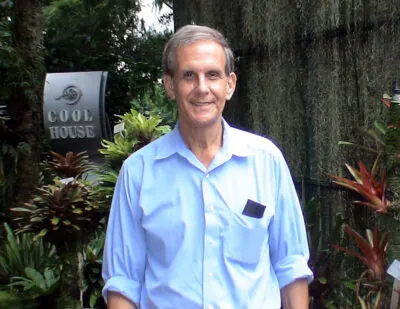
Dr. David Zee, MD, is a pioneering neurologist whose recent generous donation boldly advances VeDA’s medical advocacy programs. As a long-standing member of our Medical and Scientific Advisory Board and now a Trustee, Dr. Zee continues to support VeDA’s mission with profound integrity and vision.
Six Decades of Groundbreaking Contributions
Dr. Zee’s storied journey at Johns Hopkins began in 1965 as a medical student. After an early immersion in clinical medicine, he devoted nearly 55 years to studying and treating eye-movement and vestibular disorders. His research has profoundly shaped modern neuro-ophthalmology and vestibular medicine.
Innovations in the Clinic and Lab
Combining bedside observation, animal models, and mathematical modeling, Dr. Zee and his collaborators unraveled complex cerebellar and brainstem mechanisms governing eye movements. Notably, in 1980, with colleagues from Johns Hopkins and the United Kingdom, they identified the first effective pharmacologic therapy for a persistent, pathological nystagmus associated with cerebellar disorders. His co-authored textbook, with John Leigh, The Neurology of Eye Movements, remains a definitive resource, now in its fifth edition.
Dr. Zee and his colleagues also elucidated how magnetic fields—such as those in MRI scanners—stimulate the inner ear, causing vertigo and nystagmus. These findings not only explained this phenomenon but also influenced interpretations of functional MRI studies by accounting for vestibular effects. The work on MRI and magnetic fields won the Bárány Society gold medal in 2018 for the outstanding vestibular research in the previous six years.
A Scholarly Force and Mentor
Dr. Zee has an impressive research background with over 560 publications. His work covers a wide range of topics, including how our balance and eye movements work, the effects of magnetic fields on the inner ear, and how our brains adapt to changes caused by disease and trauma. He is particularly known for his expertise in the science of eye movements, the vestibulo-ocular reflex (which helps keep our vision stable when we move), and the function of the cerebellum, as well as many related disorders of the brain, the inner ear, and the muscles of the eyes.
Among his recent contributions, he co-authored the “Dizzy Exam Guide,” with Amir Kheradmand and Joel Goebel improving bedside diagnosis for dizzy patients, and helped spearhead the development of smartphone-based eye-tracking tools to advance the testing and diagnosis of positional nystagmus in BPPV (benign paroxysmal positional vertigo). His leadership continues through collaborative proposals, such as a standardized BPPV testing protocol using 3D simulations and investigations of skull-vibration–induced nystagmus to understand self-stability mechanisms. In 2017, he received VeDA’s “Champion of Vestibular Medicine Award”.
Elevating VeDA’s Impact
Dr. Zee’s donation is a natural extension of his decades-long commitment, from transforming clinical assessment to mentoring trainees and advancing research. His philanthropy now empowers VeDA’s medical advocacy efforts: enhancing educational tools, expanding clinician training, and amplifying patient and provider outreach.
With Deepest Gratitude
More than a donor, Dr. Zee is a luminary whose work and generosity continue to steady our mission. His passion for clear diagnosis, scientific rigor, and patient-centered care inspires all of us. On behalf of VeDA and the broader vestibular community, we offer our heartfelt thanks today and for generations to come.
Thank you, Dr. Zee, for your brilliance, your generosity, and your unwavering devotion to the pursuit of helping patients with dizziness, vertigo, and loss of balance.