Learning to Care for Yourself While Caring for Someone You Love
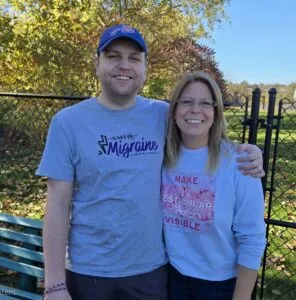 For nearly two decades, Amy Hendrickson has supported her son through a complex and debilitating vestibular disorder. Her story is a reminder that caregivers need compassion, understanding, and support, too.
When Amy Hendrickson's son Brett was nine years old, their family experienced an unimaginable tragedy. Brett's father and younger brother were killed in a car accident, leaving Amy to raise her surviving son while navigating her own profound grief.
In the years that followed, Brett began experiencing increasingly debilitating symptoms that no one could adequately explain. He struggled at school, experienced episodes of severe dizziness, and eventually became unable to work.
Amy became his advocate, his source of comfort, and the person responsible for navigating a complicated healthcare system.
But while she was focused on helping Brett, there was someone whose needs often went unattended: Amy herself.
When Caregiving Leaves Little Room for Grief
Following the accident, Amy faced the overwhelming responsibility of supporting a grieving child whose health was deteriorating.
She attended countless medical appointments, met with school officials, researched symptoms, and sought answers from one specialist after another. She also tried to maintain her job, frequently leaving work to pick Brett up from school or attend meetings.
There was little time to process her own losses.
"My grief had to sit on the back burner," Amy recalls. "Brett needed me. I mean, who else could he depend on?"
Looking back, Amy wonders whether she ever truly had the opportunity to grieve her husband and younger son.
Like many family caregivers, she put the needs of someone she loved ahead of her own, not because her feelings were unimportant, but because the immediate demands of caregiving seemed impossible to set aside.
The Weight of Being the One Who Knows Everything
Amy was fortunate to have a loving, supportive extended family. Her parents and siblings were always willing to help, whether that meant spending time with Brett or giving her a much-needed break.
But accepting that help wasn't easy.
She sometimes felt guilty asking others to step in. And because Brett's medical history was so complicated, she found it difficult to delegate responsibility.
Amy had attended every appointment. She knew his symptoms, his history, and the details of his care. Explaining everything to someone else felt like another overwhelming task.
"I just felt like he's my responsibility," she says.
That sense of responsibility can be one of the heaviest burdens caregivers carry. Even when help is available, it can feel as though no one else can fully understand what needs to be done.
Over time, the emotional toll became enormous.
Amy remembers watching Brett suffer and feeling helpless.
"How do you watch your child suffer, and you feel so helpless? What more can I do?"
There were days when she felt she simply couldn't keep going. But the next appointment, the next challenge, or the next difficult day always arrived.
And she kept going.
A Changing Role, but Not an Ending
Today, Brett is 27 and lives independently, just a few minutes from Amy.
After years of searching for answers, he was diagnosed with vestibular migraine and, more recently, episodic ataxia type 2, a rare inherited neurological disorder.
Although his symptoms remain debilitating, Brett has become increasingly responsible for managing his own life and advocating for his healthcare needs.
Amy is enormously proud of his independence.
But her caregiving role hasn't disappeared. It has simply changed.
She visits Brett several times a week, helps with errands, and encourages him to get out when he's feeling well enough. Sometimes they go to a movie or get ice cream. Other days, when his symptoms are too severe, they spend time together at his apartment.
Even when she's not with him, Amy is thinking about his well-being.
"It is exhausting," she admits. "Even when I'm not there, I'm constantly worrying about him."
For caregivers of adults with chronic illness, independence doesn't necessarily mean the end of caregiving. The practical responsibilities may change, but the emotional concern often remains.
Learning to Give Herself Grace
Amy has remarried, and she and her husband now live in a home surrounded by woods.
Spending time outdoors has become an important source of peace and restoration. She describes their home as her safe haven.
She's also learning that supporting Brett doesn't mean she must always be by his side.
When he's feeling well, she gives him space to enjoy his independence. When he needs help, he knows he can call her.
After so many years of putting Brett first, Amy recognizes the importance of caring for herself.
It's a lesson she hopes other caregivers won't have to learn the hard way.
"Understand that there is only so much that a caregiver can do," she says. "I try to do everything, and you can't."
Her advice to other caregivers is to listen to their loved ones, trust their instincts, and continue advocating when something doesn't seem right.
But she also encourages them to recognize their own limits, ask for help, and allow themselves to experience the difficult emotions that accompany caregiving.
"You really do have to give yourself grace and understand that you've got to take care of you in order to be able to take care of them."
Caring for the Carer
During National Family Caregivers Month this November, VeDA is recognizing the often-unseen contributions of the family members and friends who support people living with vestibular disorders.
Caregivers provide far more than practical assistance. They offer reassurance during frightening symptoms, advocate during medical appointments, help navigate daily challenges, and provide companionship when chronic illness leads to isolation.
But caregivers also experience exhaustion, uncertainty, frustration, and grief. Their well-being matters, too.
Amy's story reminds us that caring for someone doesn't mean having to do everything alone. Accepting help, setting boundaries, and making time for yourself aren't signs of giving up on someone you love.
They're part of making caregiving sustainable.
As Amy reminds other caregivers:
"Never stop fighting."
And just as importantly, never forget to care for yourself.
Read Amy and Brett's full story to learn more about their 17-year journey to diagnosis, Brett's experience living with a vestibular disorder, and how music has helped him find his voice.