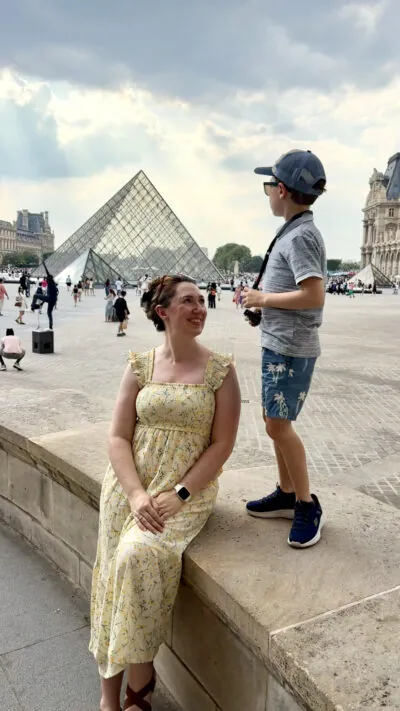
Welcome to a special patient spotlight series in celebration of Dizzy Parents Day, hosted by the Dizzy Moms Club in partnership with VeDA. By sharing these real-life journeys and practical ‘dizzy parenting hacks,’ our goal is to help parents navigating chronic dizziness find their way out of isolation and into a supportive village. Each feature highlights the voice, vulnerability, and inspiring resilience of a parent navigating an invisible vestibular disorder.
Nicola M’s Story
What is your specific diagnosis (or type of chronic dizziness), and how old are your child(ren)?
My current diagnosis is Vestibular Migraine. My vestibular symptoms began with BPPV which led to VM and PPPD. My son is 8 years old.
What is a “dizzy parenting hack” or tool you rely on to get through the week?
When symptoms start to flare up I focus on tools which help to ground and centre me in the present moment. This includes focusing on my breath and trying to breath deeply into my belly, and also focusing on the soles of my feet and the contact they make with the ground. Getting out of my head and into my body can really help to shift the perception of my symptoms.
How do you talk to your children about your dizziness in a way they can understand?
My vestibular symptoms started before I became a mother, so my son doesn’t really know anything different. Over the years I have used age-appropriate language to explain to him that mama’s ears and brain don’t always work as they should. There are also some kids TV shows that talk about being dizzy which have provided opportunities to explain to him that this is what I experience. Now that he is a bit older, he can tell when I am having a dizzy day and he does his best to help me.
What has been the most challenging or surprising emotional hurdle of parenting with an invisible illness?
The most challenging aspect of parenting with a vestibular disorder is not always being able to be there for my son in the way I want to be. This is coupled with the knowledge that there will be parents who don’t know the challenges I am living with who will judge me unfairly because of the choices I sometimes have to make. The mum-guilt and perceived judgement is really tough to handle some days.
What is a moment where you felt incredibly proud of yourself as a parent, despite your symptoms?
I can’t think of a specific moment, but over the years there have been many times my symptoms have been overwhelming and I still managed to show up for my child. Whether that be crawling on the floor to get to him when he was a baby or leaning on my husband to hold me up and guide me to the school nativity. I can’t always manage but I am proud of myself for always trying my best and never giving up. I am also proud of myself for raising a kind, caring and empathetic child, who shows me compassion and understanding on really tough days.
How did finding an ally network or a support group (like the Dizzy Moms Club or VeDA) shift how you view your diagnosis?
I found the VeDA website early on into my vestibular journey, and the information there allowed me to advocate for the correct diagnosis. Because of VeDA, I knew that I wasn’t alone but it wasn’t until I found The Dizzy Moms Club that I felt it. Connecting with other mums who just “get it”, understand the unique and challenging difficulties we face, and who support and uplift one another has been such a lifeline. I have never felt so truly understood and supported as I do with this amazing group of women. I’m not happy that I have a vestibular disorder but I am thankful that it brought these wonderful women into my life.
Why is an international advocacy day like Dizzy Parents Day so important to you, and what message of encouragement would you send to another parent who is currently suffering alone right now?
Vestibular disorders are, by their very nature, invisible. Having a day to celebrate dizzy parents helps to bring visibility to these invisible conditions. No one should have to face living with a vestibular disorder alone, and that includes parenting. Dizzy Parents Day is an opportunity to raise awareness, not only to those who don’t know what a vestibular disorder is, but also to those living with vestibular symptoms who don’t know where to turn to for support.
To any parent who is currently suffering, I want you to know that you are not alone. There is a whole community of parents out there waiting to welcome you with open arms and support you. Also, nothing stays the same forever. It might feel hard right now, but it won’t always be. Your symptoms can improve, your kids will grow up and become more independent, and you will find ways to adapt and experience joy in life again.