People assume that just because you are young, you are immune to these types of conditions. These assumptions only delay necessary care.
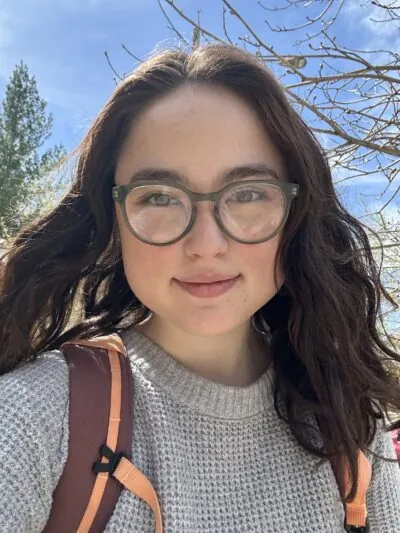
In the Fall of my Sophomore year of college, I started experiencing double vision, blurred vision, and dizziness. I assumed it was from stress or fatigue, since it tended to happen more at night, so I ignored the episodes and never really thought much of it. A few months later, I started experiencing a feeling of weakness in my arms, almost as if sandbags had been strapped to them, and the vertigo started to get worse. Once again, I just chalked it up to stress and exhaustion, and never really mentioned it to anyone.
About two weeks after I turned 20, I was admitted to the hospital for full-body weakness. I couldn’t stand or walk without crutches, and constantly looked like I was intoxicated. For about three months, no doctor had any answers besides anxiety and a vitamin B-12 deficiency. People in my life seemed to think it was just that, and no one truly believed something was actually wrong. Finally, I had one test that came back positive: the LRP4 antibody test that indicates possible myasthenia gravis. I began seeing neurology for further testing. At that time, I started to notice I was having episodes where my hearing would fluctuate. I always just assumed that it was from pressure changes, and only really mentioned it to my then neurologist, who just dismissed my symptoms. I remember telling a different doctor about my symptoms, and they told me it sounded a lot like Ménière’s Disease, but I was “too young” to have the condition.
Over time, I started to notice the vertigo and hearing loss were getting worse. One moment that sticks out to me the most was when I finally started telling other people about my hearing loss. I am on my college’s curling team (shoutout DU Curling!) and was at a curling competition when I noticed my hearing had gotten worse. This time, though, it never really got back to normal. I told my teammates, who all seemed really concerned, and explained that sensation had never happened to them on the curling ice. So, I finally decided to tell my PCP about the symptom.
While I was waiting for audiology and vestibular testing, I noticed my hearing got really bad one night. I woke up the next morning expecting it to be back to normal, but it never improved. It stayed like that for a few days, and I began to worry it would never come back. At that time, I started to notice my vertigo and hearing loss were starting to affect my relationships with people. I remember being at my cousin’s college graduation, and my family seemed really frustrated that I couldn’t hear what they were saying. That was a moment where I started to realize my symptoms were impacting my life in a whole new way. I couldn’t hear my friends in crowded places, and people seemed to think I was ignoring them. I have several other chronic illnesses, and had always hoped that it was just a weird symptom of a condition I already had. In that moment, though, I started to realize something else was probably going on.
Finally, vestibular testing diagnosed me with Ménière’s. Apart from the vertigo, my other noticeable symptoms were balance issues and hearing problems. So, I got hearing aids and AFOs (ankle-foot orthotics). The biggest challenge I faced with getting these assistive devices is that many people don’t seem to believe me or my symptoms because of my age. I have had so many grown adults assume that I wear the braces because I broke my ankles, or wear hearing aids because I went to too many loud concerts. It can be really frustrating trying to go about my day-to-day life when my symptoms are flaring.
When I received my diagnosis, my ENT doctor called me two hours later and told me that I had Ménière’s. She asked if I had any questions, but never really answered any of the questions I had. I remember setting up several appointments with the team, particularly ones for when my symptoms were really bad. Right before one of my appointments, my doctor canceled my appointment, and then the whole team proceeded to ghost me. The lack of communication had been bad for a while, but the cancellations came with no notice or explanation. I think that was the moment I felt most alone, especially when I felt like the person I was supposed to trust completely betrayed me.
I am lucky to have many support systems in place, including my friends and family. One night at the beginning of all of this, I felt really alone. My curling team refused to leave me out of practice. I remember they strapped me to a chair, and everyone took turns pushing me around the ice so I could participate. It was such a small gesture, but moments like those remind me that I am not alone in all of this.
I think my biggest life lesson through all of this is that no one is too young to have a vestibular condition. I want someone young and experiencing these symptoms to know it is not all in their head. I wish I could find myself from a year and a half ago and tell her I am thriving as a college student applying to grad school, writing a senior thesis, working two jobs and an internship, and serving as VP of the curling team. It’s not always easy, but it does get better!